
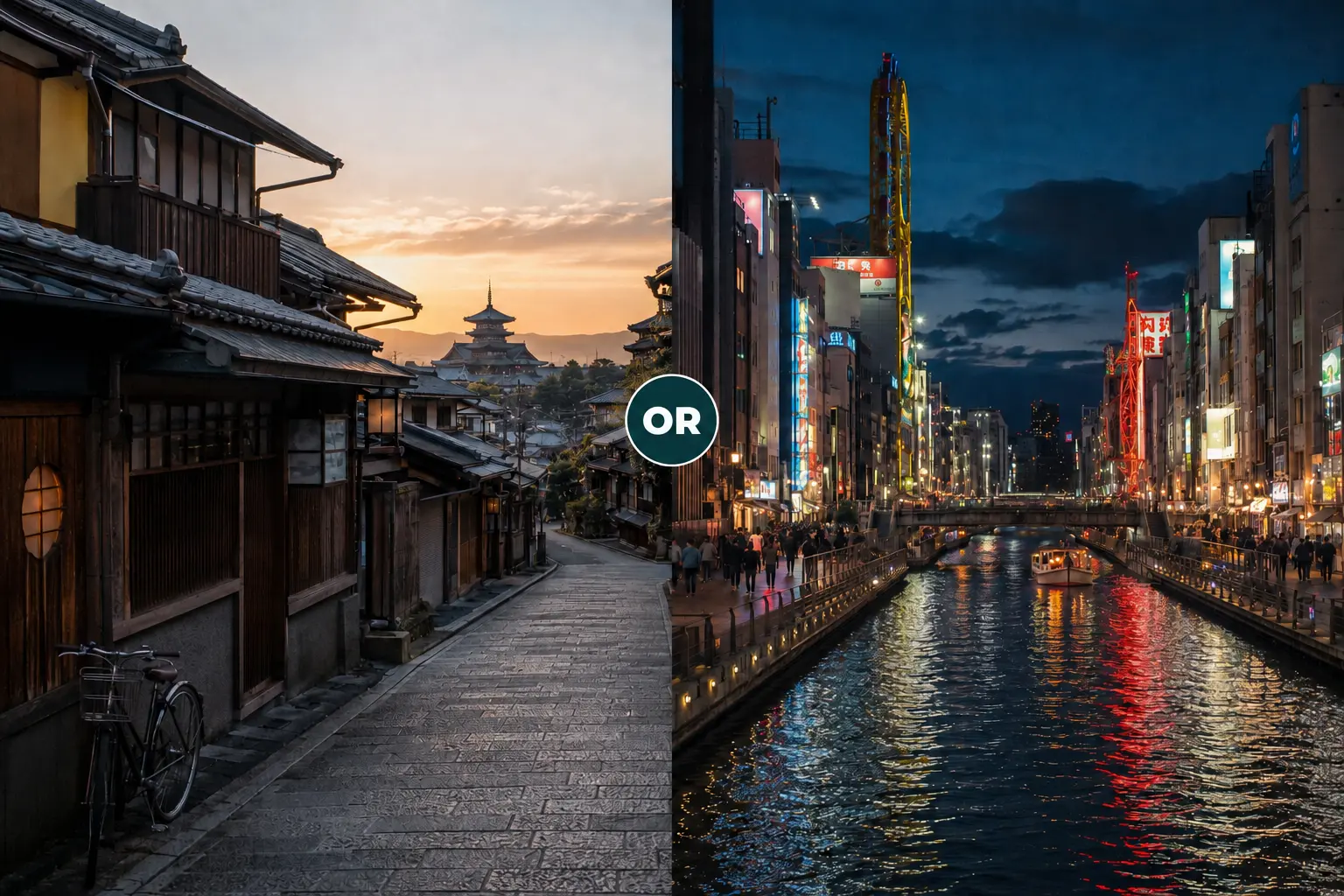
Choosing between Kyoto and Osaka is not really about deciding which city is better. It is about deciding which city makes your version of the trip easier.
Kyoto puts you closer to temples, shrines, traditional neighbourhoods and many of the places first-time visitors picture when they imagine Japan. Osaka gives you livelier evenings, excellent casual food, major shopping districts and a convenient base for exploring the wider Kansai region.
The cities are close enough to visit from one another, but they do not feel interchangeable. Where you sleep affects how early you can begin sightseeing, how much commuting you do and what is outside your hotel after dinner.
Kyoto or Osaka: the short answer
Stay in Kyoto if temples, historic neighbourhoods and early-morning sightseeing are your priorities. Stay in Osaka if food, nightlife, shopping and energetic evenings matter more. If you have five nights or longer, splitting your stay between the two cities is often the most enjoyable option.
For a first trip with only three nights, Kyoto is usually the stronger base if your must-see list includes Fushimi Inari, Kiyomizu-dera, Gion and Arashiyama. Staying locally removes a return commute and makes it easier to reach popular places before the busiest part of the day.
Choose Osaka instead if you want Kyoto as one part of a broader Kansai trip rather than the main event.
Kyoto vs Osaka at a glance
Priority | Better choice | Why |
|---|---|---|
Temples, shrines and traditional streets | Kyoto | More of the region’s headline historic sights are within the city |
Food and casual dining | Osaka | Strong street-food culture and a wide choice of informal restaurants |
Nightlife | Osaka | Dotonbori, Namba and Umeda remain lively well into the evening |
Early access to Kyoto attractions | Kyoto | Avoids starting the day with an intercity journey |
Shopping | Osaka | Large, concentrated shopping districts around Umeda and Namba |
Traditional atmosphere | Kyoto | Historic streets, temple districts and ryokan stays are easier to build into the trip |
Regional day trips | Osaka | A practical base for Nara, Kobe, Himeji and other Kansai destinations |
A quiet evening after sightseeing | Kyoto | Many areas become calmer after day visitors leave |
Universal Studios Japan | Osaka | Considerably more convenient for an early park arrival |
A first trip focused on classic Japan | Kyoto | Better aligned with the sights most first-time visitors prioritise |
Choose Kyoto if sightseeing is the main purpose of your trip
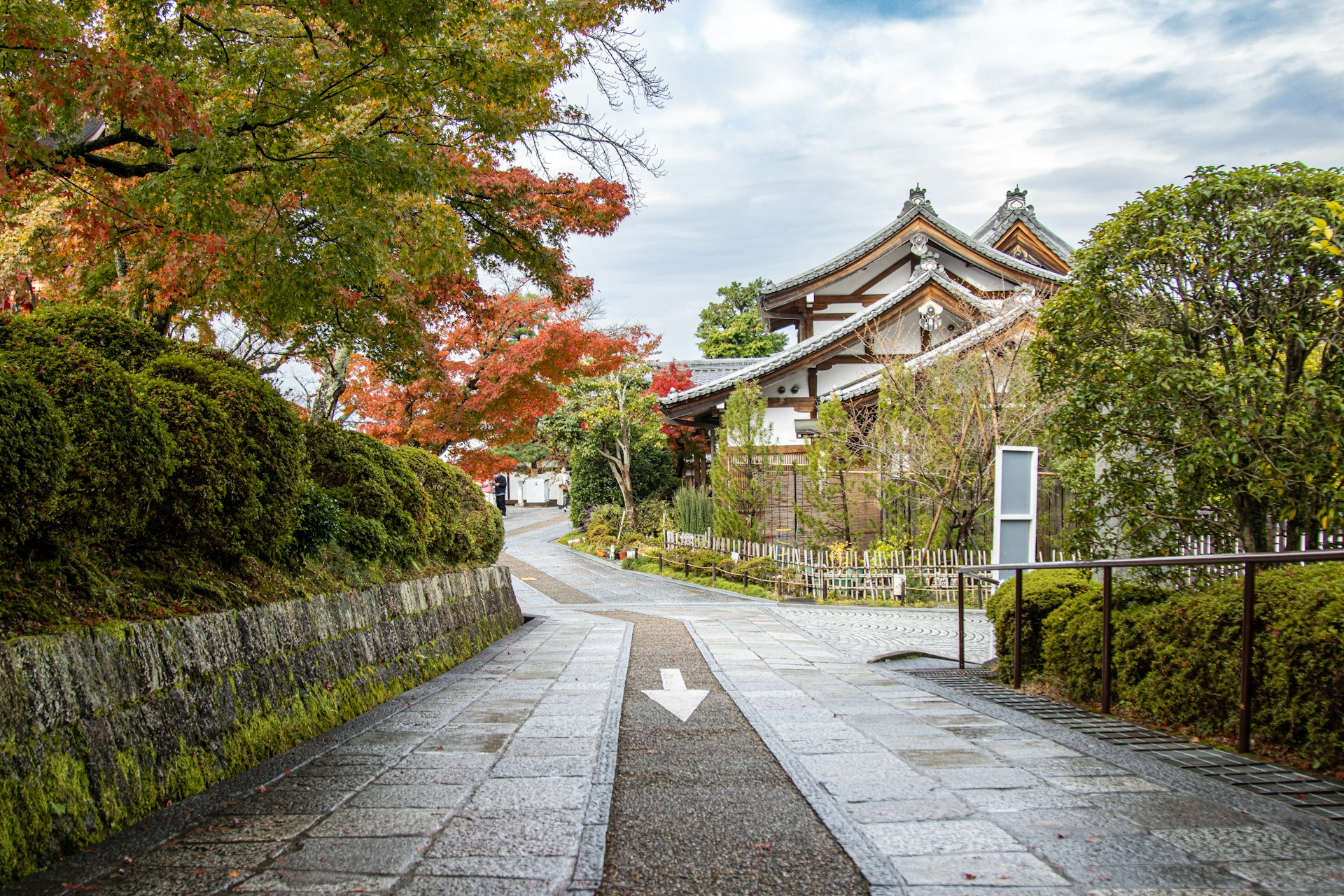
Kyoto is the better base when your itinerary is built around Kyoto itself.
The city’s major attractions are spread across several districts. Fushimi Inari is in the south, Arashiyama is in the west, and Kiyomizu-dera and Gion are on the eastern side. Even when you stay in Kyoto, a sightseeing day requires some movement between trains, buses and walking routes.
Staying in Osaka adds an intercity journey before that local travel begins.
This distinction matters because “Osaka to Kyoto” usually refers to travel between major stations—not from your hotel door to a temple entrance. A hotel in Namba and a morning visit to Kiyomizu-dera, for example, may involve reaching an Osaka terminal, taking the intercity train, transferring again and then walking or using a bus.
The journey is manageable, but repeating it on several days can make the trip feel more commuter-heavy than expected.
Kyoto is the stronger choice if you want to:
- Visit Fushimi Inari early in the morning
- Walk through Higashiyama before tour groups build up
- Experience Gion in the evening without watching the time for a return train
- Divide the city into sensible eastern, western and southern sightseeing days
- Stay in a ryokan or a neighbourhood with a more traditional atmosphere
If this sounds like your trip, use our 3-day Kyoto itinerary to organise the city geographically instead of crossing it repeatedly.
Choose Osaka if food and evenings matter more
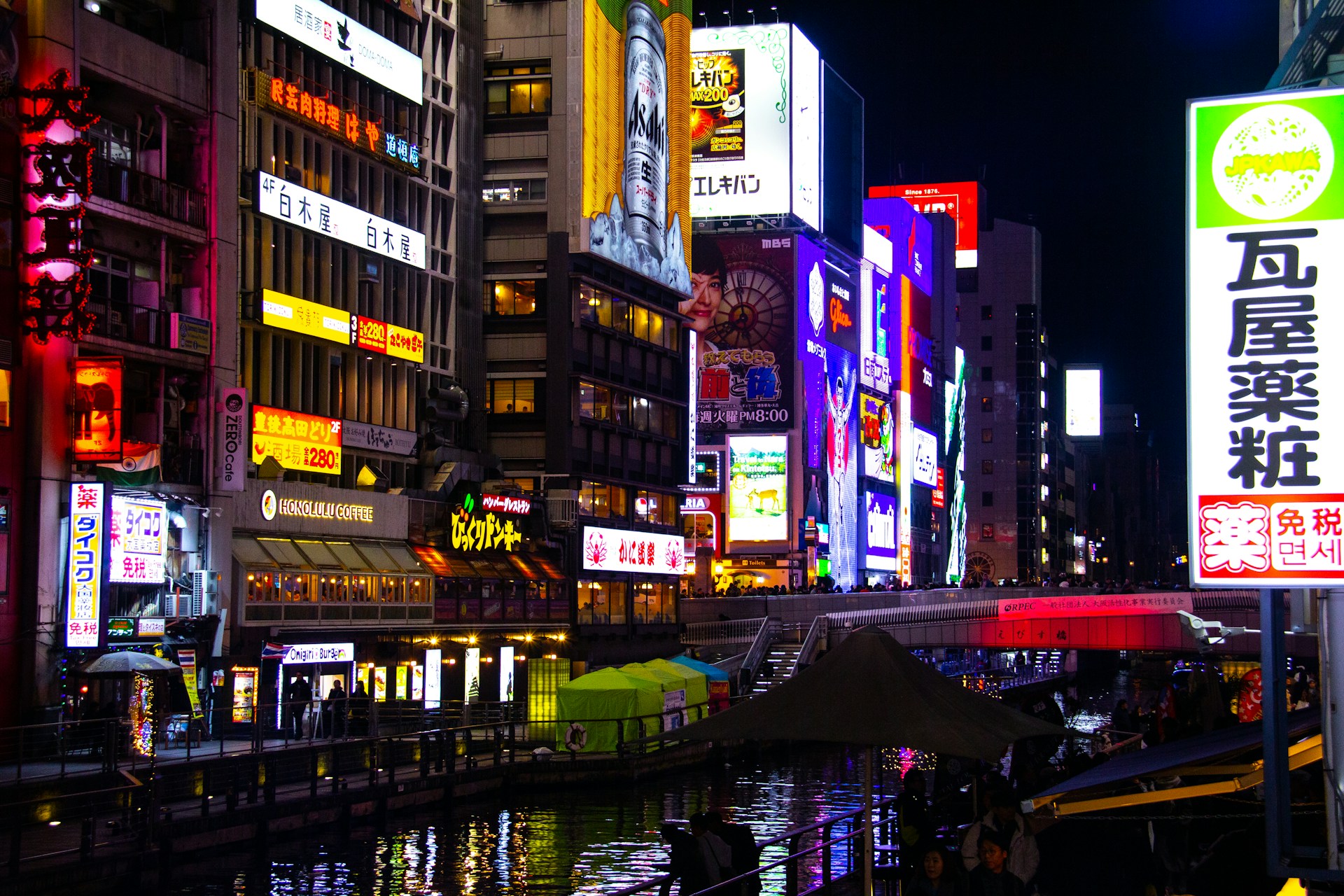
Osaka is a stronger base for travellers who want busy evenings and easy access to restaurants, bars, entertainment and shopping after the day’s sightseeing is finished.
Areas such as Namba and Dotonbori are known for bright streets, casual restaurants and late-night energy. Umeda offers major shopping centres, transport connections and a more polished city-centre feel. The result is that returning to Osaka can feel like the beginning of the evening rather than the end of the day.
Osaka is likely to suit you better if you want to:
- Explore Dotonbori and Namba after dark
- Prioritise street food and informal dining
- Visit Universal Studios Japan
- Take several day trips across Kansai
- Stay close to large shopping and entertainment districts
- Experience Kyoto without making it the centre of the entire trip
The Japan National Tourism Organization describes Osaka as a practical base for the wider Kansai region, with Kyoto, Nara, Kobe and Wakayama accessible from its central transport hubs.
That makes Osaka particularly useful for travellers building a varied regional itinerary rather than spending several consecutive days in Kyoto.
Is it easy to visit Kyoto from Osaka?
Yes. Visiting Kyoto from Osaka is straightforward, and multiple railways connect the two cities.
The best route depends on where you are staying and which part of Kyoto you want to reach:
Route | Most useful for |
JR Osaka Station to Kyoto Station | Kyoto Station area and onward JR connections |
Hankyu Osaka-Umeda to Kyoto-Kawaramachi | Downtown Kyoto, Nishiki Market and easier access towards Gion |
Keihan services from Osaka | Eastern and southern Kyoto stops along the Keihan corridor |
Official tourism information places the Osaka-Umeda to Kyoto-Kawaramachi journey at roughly 43 minutes on suitable Hankyu services. JNTO describes Kyoto as approximately 50 minutes from Osaka by commuter train, depending on the service and route.
Those times make Kyoto a realistic day trip. However, they should not be treated as the total door-to-door journey.
.webp)
Allow additional time for:
- Getting from your hotel to the departure station
- Finding the correct platform
- Transfers within Kyoto
- Walking or taking a bus to the attraction
- Queues and congestion during busy seasons
- Returning to Osaka after dinner
One Kyoto day from Osaka is easy. Two days are still reasonable. If Kyoto occupies three or more days of your plan, staying there usually becomes more efficient.
Which city has better food?
Both cities are excellent food destinations, but they offer different experiences.
Osaka is better for energetic, casual eating
Osaka is closely associated with approachable local favourites such as takoyaki and okonomiyaki. Its central entertainment districts make it easy to move between snacks, restaurants and bars without treating dinner as a formal event.
Choose Osaka if your ideal evening involves following the lights, joining a queue that looks promising and trying several things as you walk.
Kyoto is better for atmosphere and traditional specialities
Kyoto offers its own distinct food culture, including tofu cuisine, matcha sweets, kaiseki dining and the produce of Nishiki Market. Dining can feel more closely connected to seasonality, presentation and setting.
Choose Kyoto if a quiet meal, traditional townhouse restaurant or ryokan dinner is part of the experience you want.
For most travellers, Osaka wins for variety and late-night accessibility. Kyoto wins when atmosphere and tradition are more important than evening energy.
Which city has better nightlife?
Osaka wins clearly for conventional nightlife.
Namba, Dotonbori, Shinsaibashi and parts of Umeda give travellers far more choice after dinner. Bars, late-night restaurants, entertainment and shopping are concentrated enough to explore on foot.
Kyoto is not silent after dark. Pontocho, Kiyamachi and parts of downtown Kyoto have bars and restaurants, while an evening walk through Gion can be memorable. But the overall mood is calmer, and the city’s appeal after dark is often atmospheric rather than high-energy.
Stay in Osaka if you want late nights. Stay in Kyoto if you want early mornings and do not mind quieter evenings.
Which is better for families?
The answer depends on the children’s ages and the itinerary.
Kyoto works well for families who want cultural sightseeing and are comfortable with walking. Staying near Kyoto Station can simplify arrivals, departures and some train connections. However, temple-heavy days can become tiring, particularly when buses are crowded or attractions are spread across different districts.
Osaka may be easier for families prioritising Universal Studios Japan, aquariums, shopping, casual dining and shorter bursts of sightseeing. Its central districts can offer more immediate entertainment when children have had enough of temples.
For families splitting time between cultural sights and attractions, divide the stay rather than commuting with tired children on several consecutive days.
Which is better for couples?
Kyoto is usually the more romantic choice.
Early walks through Higashiyama, a traditional stay, quiet gardens and evening streets around Gion create a more intimate trip. Couples planning an anniversary or honeymoon may find that the accommodation itself becomes part of the experience.
Osaka is better for couples who prefer food crawls, nightlife, shopping and a less formal atmosphere.
A strong five-night plan for couples is three nights in Kyoto followed by two nights in Osaka. It begins with slower cultural sightseeing and ends with a livelier city break.
Which is better for solo travellers?
Both work well for solo travel.
Osaka may feel more immediately social because of its casual restaurants, nightlife and busy central neighbourhoods. It is a good match for travellers who like city energy and spontaneous evenings.
Kyoto suits independent travellers who enjoy walking, photography, gardens and beginning the day early. The challenge is less about travelling alone and more about managing the distances between attractions.
Solo travellers who dislike changing hotels can comfortably use either city as a base. Choose according to what you want outside your hotel in the morning and at night.
Is Kyoto or Osaka cheaper?
Neither city is always cheaper.
Accommodation prices change significantly with the season, day of the week, neighbourhood and major events. Kyoto can become especially expensive during cherry-blossom season, autumn foliage and holiday periods. Osaka has a larger urban hotel market, but popular areas around Namba and Umeda can also command high rates.
Compare the total trip cost rather than the room rate alone.
A cheaper Osaka hotel may not save much if you pay for repeated return journeys and lose useful sightseeing time. A more expensive Kyoto hotel may offer better value if it lets you walk to evening areas and reach major attractions earlier.
Before booking, compare:
- The nightly hotel price
- Transport to your planned attractions
- Time spent commuting
- Luggage transfer or locker costs if splitting the stay
- The value of being near your preferred evening area
Should you stay in one city and visit the other?
Yes, particularly for short trips.
Changing hotels consumes time. You need to pack, check out, move your luggage, wait for the next check-in and reorient yourself in a new neighbourhood. For three or four nights, one base may be easier.
Use Kyoto as your only base when most of your itinerary is in Kyoto and Osaka is mainly an evening or one-day visit.
Use Osaka as your only base when Kyoto is one day among several regional excursions, or when Osaka’s food and nightlife are central to the trip.
Split the stay when both cities have enough planned activities to justify waking up in each one.
Recommended Kyoto and Osaka split by trip length
Total time | Suggested split | Best for |
3 nights | 3 Kyoto or 3 Osaka | Choose one clear priority and avoid moving hotels |
4 nights | 3 Kyoto + 1 Osaka, or one base | Kyoto-focused first visits with a taste of Osaka |
5 nights | 3 Kyoto + 2 Osaka | The most balanced first-time combination |
6 nights | 3 Kyoto + 3 Osaka | Equal interest in culture, food and city experiences |
7 nights | 4 Kyoto + 3 Osaka | A slower Kyoto plan plus substantial Osaka time |
These are starting points, not fixed rules. A Universal Studios day, a ryokan stay or several regional day trips can change the ideal balance.
Where should you stay in Kyoto?
Kyoto Station
Best for train connections, straightforward arrivals and travellers taking regional day trips. The atmosphere is modern rather than traditional, but the convenience is difficult to beat.
Downtown Kyoto
Best for restaurants, shopping and access to several transport options. Areas around Kawaramachi and Karasuma make a practical all-round base.
Gion and Higashiyama
Best for atmosphere and early access to eastern Kyoto. Expect a more scenic setting, but check the walk to the nearest useful station before booking.
Explore options and build your days with the Travinora Kyoto guide.
Where should you stay in Osaka?
Namba
Best for food, nightlife and first-time city energy. Dotonbori and Shinsaibashi are nearby, and the area has useful transport connections.
Umeda
Best for regional rail access and a more polished city-centre environment. It is particularly convenient if you plan to make repeated journeys towards Kyoto.
Tennoji
Best for travellers looking for good transport connections and a base south of the busiest central districts. It can also be useful for airport access and southern Osaka attractions.
Start planning with the Travinora Osaka guide.
Test both bases before booking your hotel
A railway journey that looks short on a map can create a very different day once hotel location, transfers and local travel are included.
Before choosing Kyoto or Osaka, build both versions of the trip:
- Create the days you actually want in Kyoto and Osaka.
- Place the attractions in a realistic order.
- Include travel time between each stop.
- Compare how much of each day is spent moving.
- Choose the base that supports the itinerary rather than fighting it.
Plan your trip with Travinora to see your activities, durations and travel gaps in one visual itinerary.
Final verdict: should you stay in Kyoto or Osaka?
For most first-time visitors focused on temples, traditional neighbourhoods and classic sights, Kyoto is the better place to stay. It gives you more control over early mornings and reduces unnecessary commuting during Kyoto-heavy days.
For travellers who prioritise food, nightlife, shopping, Universal Studios Japan and regional day trips, Osaka is the better base.
If you have at least five nights and both cities matter to you, split the stay. Three nights in Kyoto and two nights in Osaka is a balanced starting point that lets each city be experienced at the time of day when it is at its best.
Frequently asked questions
Is it better to stay in Kyoto or Osaka for a first trip to Japan?
Kyoto is usually better when historic sights are the main priority. Osaka is better for food, nightlife, shopping and regional day trips. Travellers with five or more nights should consider staying in both.
Can I stay in Osaka and visit Kyoto every day?
Yes, but repeated journeys can consume more time than the headline train duration suggests. If you plan to spend three or more full days sightseeing in Kyoto, staying in Kyoto is normally more convenient.
Can I stay in Kyoto and take a day trip to Osaka?
Yes. Osaka is easy to visit from Kyoto, particularly if you want an afternoon and evening around Umeda, Namba or Dotonbori. Check the return schedule for your chosen railway before staying out late.
How many nights should I spend in Kyoto and Osaka?
For a five-night first visit, three nights in Kyoto and two in Osaka is a useful starting point. Add more Kyoto time for temples and traditional experiences, or more Osaka time for nightlife, shopping and regional excursions.
Is Osaka a good base for Kyoto and Nara?
Yes. Osaka’s major transport hubs make it a practical base for day trips across Kansai. It is particularly suitable when you want to visit several cities without changing hotels.
Which is closer to Kansai International Airport?
Osaka is geographically closer, but direct limited-express services also connect Kansai Airport with Kyoto. The most convenient base depends on your hotel location, flight time and selected train service.
Is Kyoto boring at night?
No, but it is quieter than Osaka. Kyoto offers atmospheric evening walks, restaurants and bars around areas such as Gion, Pontocho and Kiyamachi. Osaka provides a larger and more energetic late-night scene.
Data check
Based on the research done by Travinora team, checked August 2026.

Bookable now
Kyoto & Nara Day Trip with Optional Lunch : From Osaka / Kyoto
★ 4.2 (55) · 9.5 hr · from $49
Book this experience →